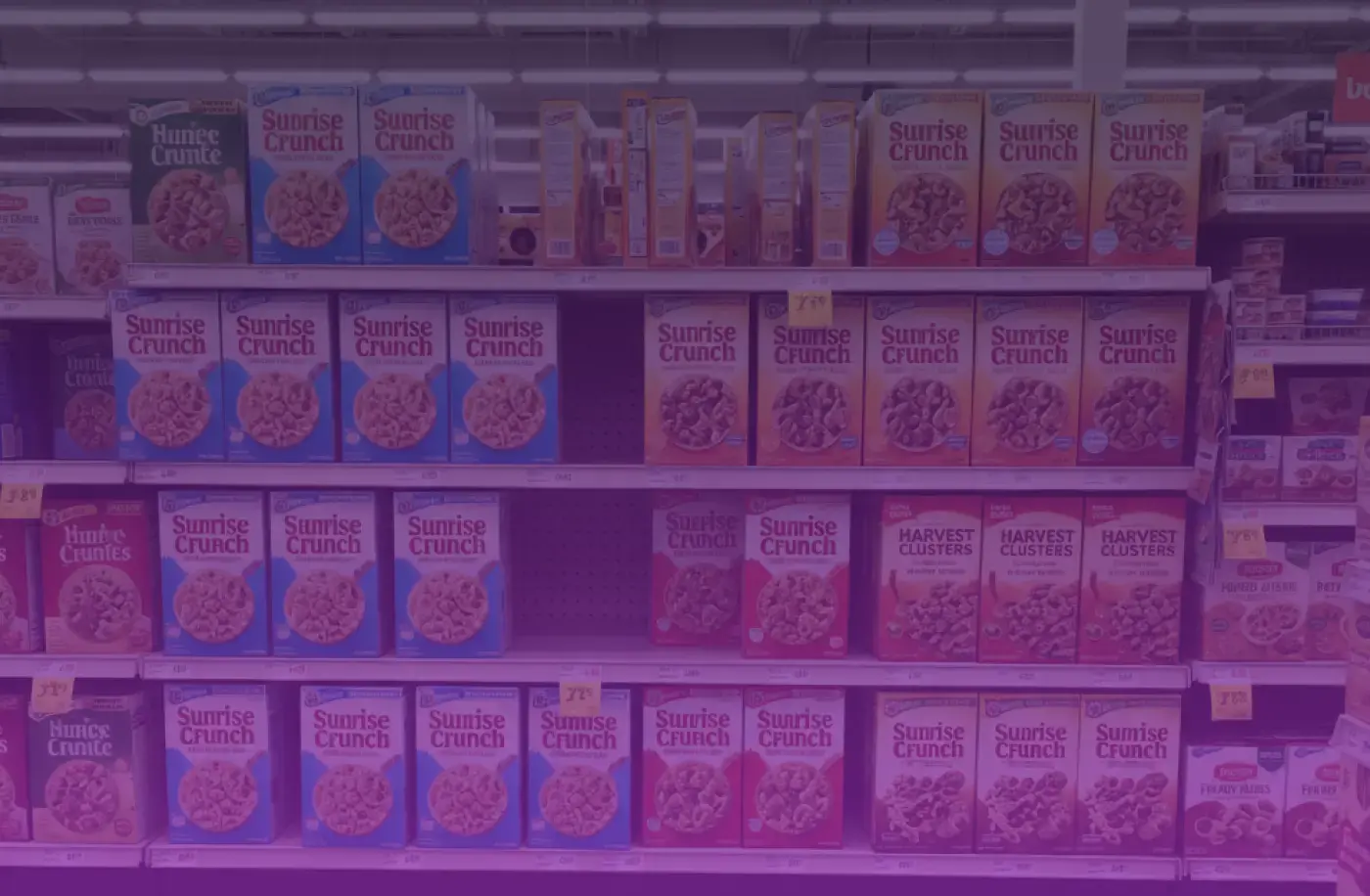
There’s an empty space on the shelf. A product sold faster than expected, or the backroom hasn’t caught up yet. You don’t have time to chase inventory, double-check a planogram, or wait for the next delivery. There are customers in the store, other shelves to check, and a long list behind this one task.
So you do what most people do: pull the nearest product, face it out, and keep the aisle looking clean.
What happens, though, after you make that decision and walk away from a shelf that looks “fine”? Once the space is filled, no one questions it. Shoppers make different choices, sales data captures those picks, and planning systems treat them as real demand.
That’s how a small shortcut starts to travel further than anyone expects.
Single-Shelf Decisions Don’t Stay Small
From the shopper’s point of view, nothing is “wrong.” They don’t see an out-of-stock. They see a different option where they expected something else. Some will grab it. The more loyal customers often won’t.
The impact on sales is easy to overlook. A couple of lost units here, or a few baskets there can be discreet enough to blend into the noise of daily variation.
And the data reflects exactly that. It doesn’t know what a shopper was looking for. It only records what sold. From the system’s perspective, nothing was wrong.
If the Shelf Lies, Everything Upstream Starts Guessing
Once that distorted data enters the system, it doesn’t stay local.
POS becomes the source of truth, even though it’s missing the context of what should have been on the shelf. A SKU that underperformed didn’t necessarily lose demand. It may never have had a fair chance that week.
Forecasting reacts accordingly. Less movement means less supply next time. Multiply that across stores and reporting cycles, and what began as a few substitutions starts to look like a real trend.
Planning responds to that trend: space shifts, and inventory gets reallocated. The shelf is reorganized around a story that never actually happened.
At that point, the system isn’t correcting the shortcut. It’s reinforcing it. And the further upstream you go, the harder it is to trace the issue back to that original shelf.
When Retail Execution Drift Becomes a Planning Problem
Because nothing ever fully breaks, resets happen, and the shelf gets put back the way it’s supposed to be. The issue feels closed. But the conditions that caused the shortcut in the first place don’t go away.
Between resets, stores are dealing with late trucks, partial shipments, promo pull-forward, and constant time pressure. That’s when the shelf starts to diverge again.
From headquarters, what shows up later is a pattern. Certain SKUs keep underperforming. Certain stores keep drifting out of spec. Planning teams respond the only way they can, adjusting space, assortment, or supply based on the data they see.
Store teams, meanwhile, are responding to what’s physically available in the moment. Both sides are acting rationally. They’re just reacting to different realities.
That’s how a one-time workaround turns into a long-term planning assumption. The system never saw when the shelf changed, or why.
Why Store “Compliance” Stops Working the Moment It Feels Punitive
This is usually where compliance enters the conversation. And just as often, it misses the point.
When feedback shows up late, stripped of context, it feels like blame. Store teams are told something is wrong without seeing how it happened. That turns compliance into policing. And policing doesn’t stop drift. It just teaches people how to work around it.
What changes behavior is feedback that arrives while the shelf is still fixable. When teams can see what’s off, in context, and early enough to act, shortcuts don’t have time to become habits.
How to Catch Shelf Drift While It’s Still Easy to Fix
Stopping drift means closing the visibility gap between resets.
Seeing the shelf as it actually is, while it still matters, keeps small issues from compounding. The shelf can be corrected before shoppers adapt, data shifts, and planning reacts to the wrong signal.
This is where retail image recognition changes the dynamic. Instead of debating compliance after the fact, teams can see what changed and address it in the moment. Headquarters gets a consistent view across stores. Store teams get guidance that helps them act, not explanations weeks later.
I’ve seen this pattern play out for years, across categories and retailers.
Teams plan carefully at headquarters, then lose visibility the moment those plans hit the store. By the time issues surface in reports, they’ve already shaped shopper behavior and the data that feeds the next decision. At that point, everyone is reacting late.
That’s why I’ve always believed teams need to see the shelf while it’s still changing — not weeks later, and not filtered through reports.
That belief shapes the work we do at Vision Group.
As one retail execution leader at L’Oréal put it:
“The Store360 tool is so powerful. Photos plus reporting make it easy to get store managers to act.”
Fix the Shelf Once, or Keep Paying for the Shortcut
You can keep correcting the same issues after the fact—reworking plans, debating numbers, explaining why results didn’t match expectations. Or you can address the problem where it starts, while the shelf is still easy to put back on track.
If this pattern feels familiar, it’s usually a shelf visibility issue. And that’s a solvable problem.
See how retail teams and CPG brands are getting ahead of it.