Predict What Will Sell — Not Just What Sold
Traditional forecasting uses corrupted signals. Demand.AI predicts true demand — correcting for shelf failures, stockouts, and execution gaps that suppress the observed sales record — by combining consumer behaviour from Demand.AI with real shelf availability from Execution.AI.
Trusted by the largest CPGs and retailers
340+
Clients75+
Countries11+
Years of retail data2M+
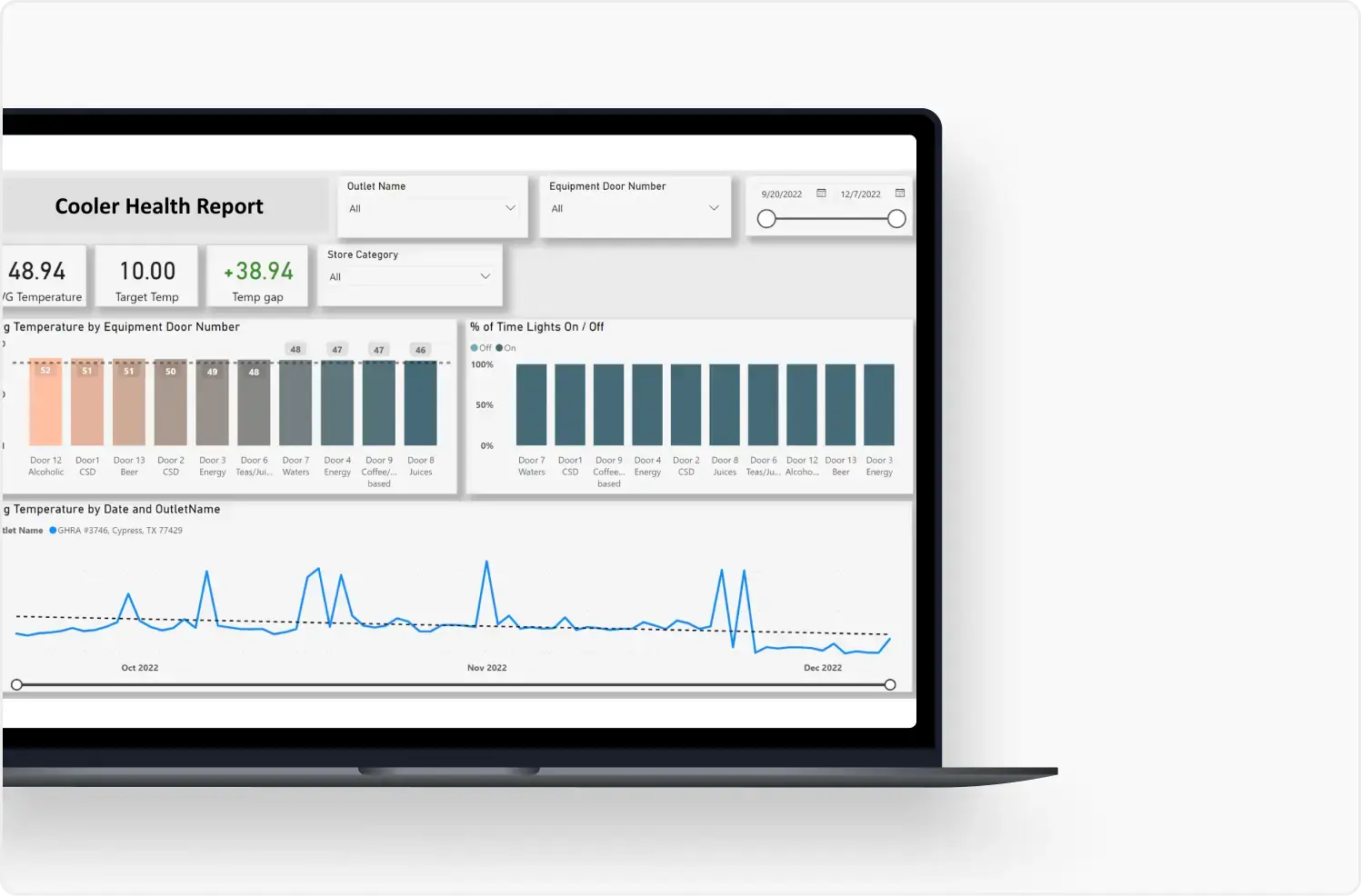
Assets MonitoredWhen Cooler Problems Show Up Early
Teams get notified the moment temperatures drift or performance drops.
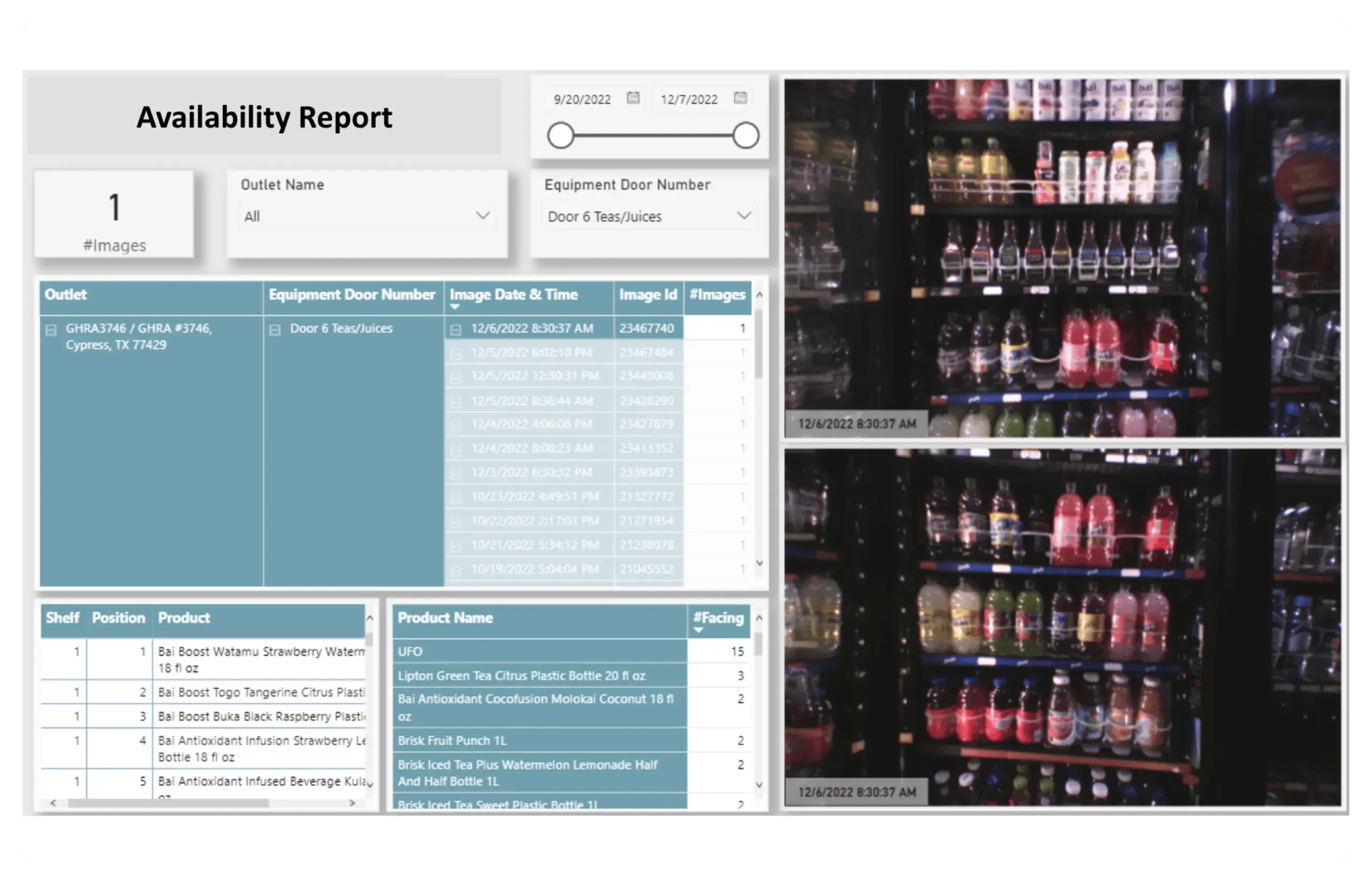
Stock levels stay visible between visits—not just when someone checks in person.
Stores avoid spoilage, warm product, and last-minute replacements.
Field teams know which locations to prioritize before shoppers feel the impact.
WHY TEAMS RELY ON DEMAND.AI
Separates true demand from lost sales.
→ Corrects for shelf failures — when a shelf is empty, Demand.AI identifies this as suppressed demand rather than low consumer interest
→ Combines transaction behaviour signals with Execution.AI shelf availability data — a combination no standalone forecasting vendor can replicate
→ Produces more accurate demand predictions than historical POS alone — because it corrects the signal before forecasting
→ Feeds supply chain planning systems with a better signal — SAP, Kinaxis, RELEX, o9, Blue Yonder all benefit from a corrected input
→ Store-level demand prediction at the granularity needed for Assortment.AI assortment decisions — not just banner averages
Signal flow
Receives: Transaction data capability behaviour + Execution.AI shelf availability + Product.AI product attributes.
Produces: Demand Prediction — true demand corrected for execution failures, feeding Assortment.AI and supply chain systems.
Separates true demand from lost sales.
Signal flow
Receives: transaction data capability behaviour + Execution.AI shelf availability + Product.AI product attributes
Produces: Demand Prediction — true demand corrected for execution failures, feeding Assortment.AI and supply chain systems
How Demand.AI produces true demand.
01
Execution data ingested
Execution.AI shelf availability data identifies where and when shelves were empty, misplaced, or incorrectly priced.
02
Signal corrected
Demand.AI removes execution failures from the historical record separating true demand from observed sales.
03
Consumer behaviour applied
Demand.AI demand transfer models and decision trees are applied to model true substitution patterns.
04
Prediction produced
Demand.AI outputs true demand by store cluster — feeding Assortment.AI for assortment decisions and supply chain for replenishment.
Continuous Learning Loop of
How Demand.AI works
What Demand.AI delivers
Demand transfer modelling
Where demand actually goes when a product is unavailable — in-brand, cross-brand, or category exit..
Store-level granularity
Demand predictions at the store cluster level, not just banner averages — the resolution Assortment.AI needs.
Supply chain integration
Corrected demand signals feed directly to SAP, Kinaxis, RELEX, o9, and Blue Yonder — better inputs, better outputs.
Execution-adjusted
Continuously updated as Execution.AI data identifies new execution failures and corrects the historical record..
Near-term opportunity
Demand.AI is built and ready for commercialisation as a standalone product — the highest near-term revenue opportunity in the platform.
Platform context
Demand.AI is Layer 03 — Demand Intelligence. It is built and operational. It is not yet commercialised as a standalone product — it currently powers Assortment.AI assortment intelligence and feeds supply chain integrations. Commercialising Demand.AI as a standalone demand intelligence product is the highest near-term revenue opportunity in the Vision Retail Intelligence Stack.
See Demand.AI in action.Talk to a Vision specialist about your retail setup.
Turn every cooler into a live performance tracker
Replace vending headaches with autonomous coolers that use AI to manage stock, usage, and performance on their own. Computer vision and AI give your equipment a live view of what's happening inside your cooler.
How Vision Group's Retail Asset Monitoring Solutions Works
→ Predict stockouts and restock at the right time
→ Monitor cooler conditions to avoid sales loss
→ Track what gets purchased or ignored
→ Reduce maintenance visits
→ See performance by product, machine, or outlet
Coolers and sensors capture product interactions in real time. Read
AI scans each SKU, flags low stock or tech issues, and tracks performance. Report
Dashboards summarise sales, usage, and alerts by machine or product. Act
Clear next steps to restock, rotate, or repair.
Why retailers are replacing traditional vending machines
Mechanical vending machines break or stop working, missing sales without anyone noticing. Smart coolers skip the moving parts and track performance directly — using AI to show what's stocked, what's selling, and what needs attention. Our software is compatible with most commercial coolers, freezers, and vending shells.
iVending
Upgrades any cooler with AI and smart tracking. Turns existing coolers into self-monitoring, self-reporting units.
iVentory
Adds deeper analytics, AI forecasting, and product-level visibility. Helps spot and solve inventory issues faster.
Real behaviour. Not panel estimates.
The frictionless shopping experience.
Computer vision inside the cooler.
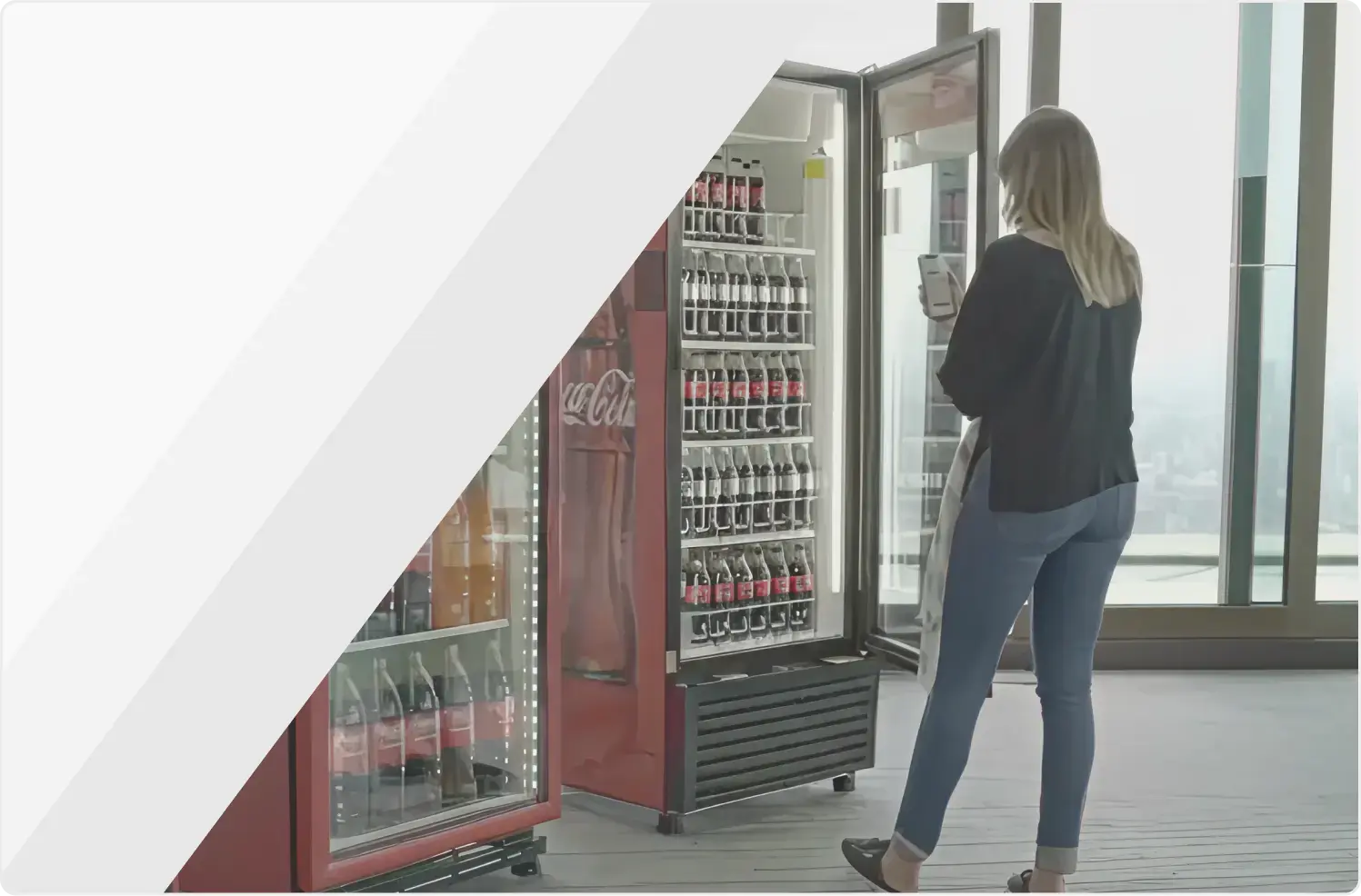
The autonomous commerce capability uses computer vision mounted inside coolers and cabinets to track exactly what is taken — with 97% item recognition accuracy. No cashier. No scanner. No friction.
Consumer approaches
Finds an Execution.AI-enabled cooler or cabinet near them. Scans the QR code on the door.
Payment validated
Payment information stored securely in the app requests bank authorisation — before the door opens.
Door opens
Consumers pick their desired items. Computer vision inside the cooler sees and identifies products in real time.
Door closes
Transaction completes automatically. Bank debits the chosen payment method.
Data captured
Every transaction recorded — what was taken, what was left, replenishment signal triggered.
97%
Item recognition accuracy inside coolers
Retrofit
Works with existing coolers, freezers, and cabinets — no new hardware required
No friction
QR code → pick → walk out. No cashier. No scanner. No queue.
True demand — not observed sales corrupted by execution failures.
Frequently asked about Demand.AI
Observed sales are what was actually purchased — a signal corrupted every time a product is out of stock, misplaced, or unavailable. True demand is what consumers wanted to buy, corrected for those execution failures. Demand.AI removes the distortion before forecasting begins.
Execution.AI feeds shelf data into Demand.AI — identifying every OOS event, misplacement, and execution failure by store and by day. Demand.AI removes those suppressed sales from the demand baseline before modelling, so the demand signal reflects true consumer intent rather than what was available to purchase.
Transaction Learning is how Demand.AI builds demand transfer models — analysing real observed substitution behaviour from POS and loyalty transaction data to map where consumer demand actually went when a product was unavailable. Built from real data, not survey assumptions.
No. Demand.AI acts as the intelligence layer that makes existing tools more accurate. Corrected demand signals feed directly into SAP IBP, RELEX, o9, and Blue Yonder — improving the accuracy of every downstream planning decision without replacing the system of record.