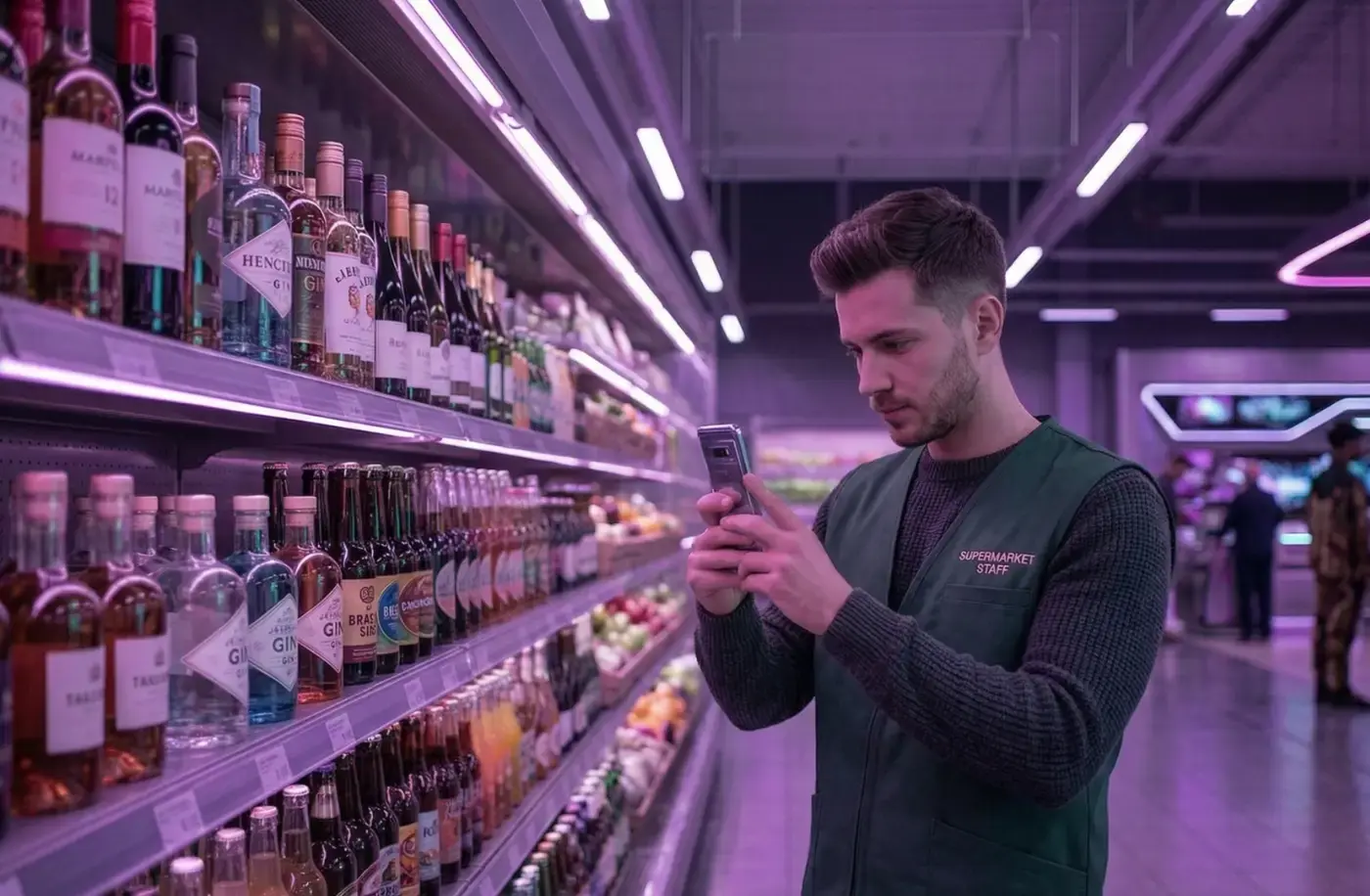
CPG brands agree on shelf placement, fund promotions, and distribute planograms to retail stores. What happens next is difficult to verify.
A field rep visits the store, checks part of the shelf, takes a few photos, and submits a report later. By the time someone reviews that report, the shelf may already have changed.
Brands end up unable to verify whether:
- The product was in the correct position
- The display was set up
- Facings were reduced during the week
Retail image recognition changes how that information is captured and when it can be acted on.
This guide explains what retail image recognition is, how it works, what it measures, and how it fits into retail execution.
What Is Retail Image Recognition?
Retail image recognition is a type of AI retail technology that analyzes photos of physical store shelves and converts them into structured, SKU-level execution data.
When a shelf image is captured, the system identifies which products are present, where each one is positioned, how much space it occupies, and whether the layout matches the expected planogram. It also reads pricing labels and detects promotional materials.
The result is a digital representation of the shelf as it exists in the store at that moment. Teams often refer to this as a realogram. It represents the actual shelf, while the planogram represents how the shelf was intended to look. The difference between the two is what the system measures.
How Does Retail Image Recognition Technology Work?
Retail image recognition processes a shelf photo in stages. Each stage answers a different question about what is on the shelf.
Object detection— ocating what is on the shelf
The first step is identifying where products are located. The system scans the image and separates products from other elements such as shelf edges, labels, or empty space. This allows it to determine how many items are present and where they are positioned.
Object recognition—identifying which product it is
Once products are located, the system identifies which specific SKU each item represents. It does this by comparing visual features such as packaging shape, colors, and label design against a reference library of product images. Because this comparison is based on visual patterns, the system can still recognize products even when they are partially blocked or captured at an angle.
Reading text—price tags, labels, and promotional materials
The final step focuses on text. The system reads price labels and promotional materials directly from the image. This allows it to verify pricing and detect whether promotional elements are in place without requiring a rep to record that information manually.
Together, these steps convert a single photo into a detailed, structured view of the shelf.
What Retail Image Recognition Measures
The main difference between manual audits and image recognition comes down to the level of detail.
A manual audit typically confirms whether a product is present. Image recognition shows how that product is positioned and whether it is supported correctly.
From one image, the system can determine which products are on the shelf, how many facings each one has, and how much space each brand occupies within the category. It can also verify whether products are placed in the correct position according to the planogram, whether pricing labels are accurate, and whether promotional materials are set up as expected.
Because all of this information comes from the same image, there is no need for additional audit forms or separate checks. The system evaluates the shelf in one pass, producing a level of detail that would be difficult to capture manually at store-visit speed.
Where Retail Image Recognition Fits in Retail Execution
Retail execution follows a sequence: teams design the shelf, stores implement it, and then conditions change over time.
A planogram may be correct on the day of a reset, but it rarely stays that way. Products go out of stock, store staff adjust placement to manage inventory, and competitors introduce new promotions that change the shelf.
The challenge is understanding what happens after the planogram is implemented.
Retail image recognition sits at that point. It captures the actual state of the shelf during the store visit and makes that information available immediately.
This changes both sides of the workflow. In the store, the rep can see exactly what needs to be corrected and fix it during the visit. At the planning level, aggregated data shows which layouts hold in practice and which ones consistently break down.
Why CPG Teams Are Adopting Retail Image Recognition
Retailers operate inside their own stores. They have continuous visibility into shelf conditions through staff and internal systems.
CPG brands operate across stores they do not control. Once a planogram is agreed and distributed, they rely on store teams to execute it and field reps to verify it.
That model has a limitation. A rep visiting multiple stores in a day cannot check every SKU in detail. The data they collect is partial, and the reporting cycle introduces delays.
This creates a gap between what was planned and what actually happens in-store.
Retail image recognition reduces that gap by providing consistent, store-level visibility during each visit. It allows CPG teams to see execution at SKU level across their network, rather than relying on delayed summaries or incomplete checks.
How Retail Image Recognition Changes Shelf Auditing
The key change is timing.
In a manual process, issues are recorded during the visit but reviewed later. By the time someone acts on them, the shelf has already been incorrect for some time.
With image recognition, the process happens in one step. The rep captures a photo, the system analyzes it immediately, and the issues are presented while the rep is still in front of the shelf.
This allows corrections to happen during the same visit. Instead of documenting problems for later review, the visit becomes an opportunity to fix them in real time. Because of this shift in timing, image recognition only creates value when it is connected to execution.
How Vision Group Applies Retail Image Recognition
Vision Group’s shelf intelligence platform (Store360) applies image recognition directly within the store visit workflow.
A rep takes a shelf photo using the app. The system analyzes the image and compares it to the approved planogram. It identifies missing products, incorrect placements, reduced facings, and pricing issues.
The rep receives a list of actions and corrects the shelf before leaving the aisle.
The data collected from these visits does not stay isolated. It connects to Vision Group’s planogram builder (EZPOG), where teams design layouts, and its assortment optimization platform, where assortment decisions are made.
This creates a continuous loop where planning is informed by what is actually happening in stores.
Book a walkthrough to see how a shelf photo turns into a compliance action list during a store visit—and how that data feeds back into your next planogram with Vision Group.
FAQ: Retail Image Recognition
What is retail image recognition?
Retail image recognition is AI-powered technology that analyzes photos of physical store shelves to automatically identify products, measure shelf conditions, detect out-of-stocks, verify pricing, and capture competitive presence data. It converts a shelf photo into structured, SKU-level execution data without manual observation or barcode scanning.
What is the difference between object detection and object recognition in retail?
Object detection identifies where products are in an image—locating each item and placing a bounding box around it. Object recognition then identifies which specific SKU each detected item is, by matching its visual characteristics against a reference database. Both processes run together in practice, but they solve different problems. Detection finds the products; recognition names them.
How accurate is retail image recognition?
Enterprise-grade systems achieve 95–98% accuracy in real store conditions. Accuracy is primarily determined by the quality and currency of the reference product image database the system matches against, and by the diversity of real-world shelf conditions the underlying model was trained on. Controlled-environment accuracy figures often overstate what a system will deliver in actual stores.
What is the difference between retail image recognition and a shelf audit?
A shelf audit is the process of evaluating in-store execution quality. Retail image recognition is the technology that powers that process automatically. A manual shelf audit relies on human observation and captures presence-level data. An AI-powered shelf audit uses image recognition to capture position-level data—faster, more consistently, and at a level of detail that field reps cannot reliably sustain across a full store route.
What is SKU image recognition?
SKU image recognition is the specific capability of identifying individual stock-keeping units by their visual appearance in a shelf photo. The AI model recognizes each product by its packaging shape, color, label design, and brand marks—without requiring barcode scans. This is the foundational capability that makes retail image recognition practical at scale, because it works on any shelf photo regardless of product orientation or lighting.