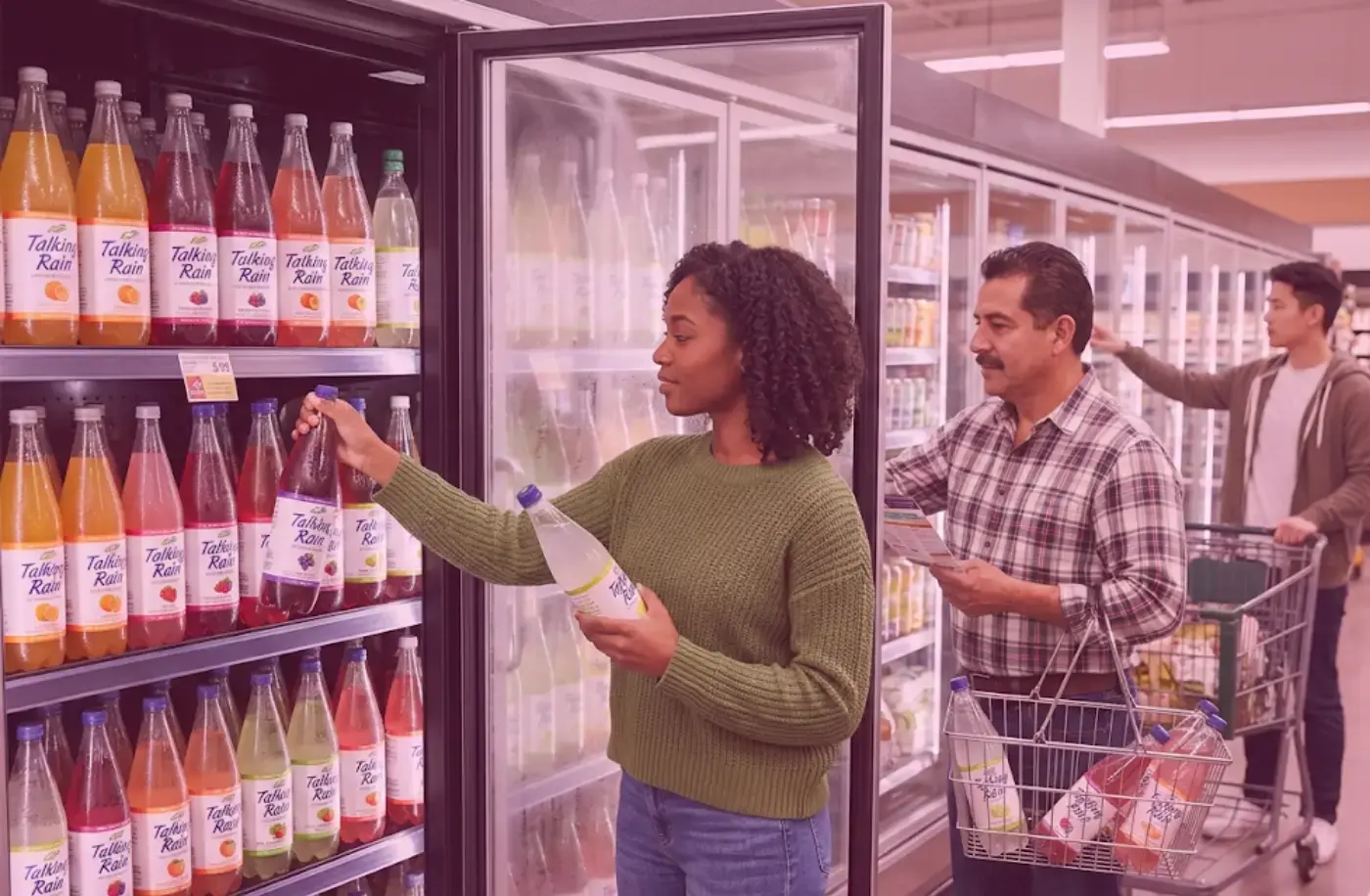
The intelligent vending and cooler market reached $17.7 billion in 2026, with projections to exceed $53 billion by 2036. Behind those numbers is a simple insight: every cooler, vending machine, and refrigerated display in a retail environment is an asset that generates or destroys revenue based on whether it is working correctly.
Yet most retail coolers remain unconnected. They break down silently. Temperature fluctuations go unnoticed until product is spoiled. Inventory runs out between service visits. And the brand has no visibility into whether its most expensive physical assets are performing or failing.
IoT monitoring changes this by turning every cooler into a data-generating, self-reporting asset.
The Problem with Unmonitored Coolers
A cooler that is offline, understocked, or running at the wrong temperature is actively costing the brand money. Temperature excursions lead to product spoilage, regulatory risk, and consumer safety issues. A cooler door that sticks shut or has a burned-out light discourages shoppers from opening it, suppressing sales even when the product inside is fine.
The traditional response is periodic service visits on a fixed schedule. A technician visits every cooler on a route every two weeks, regardless of need. The cooler that failed on day two waits twelve days for service. Meanwhile, the perfectly functioning cooler receives an unnecessary visit.
How IoT Cooler Monitoring Works
Connected cooler systems combine hardware sensors with cloud-based analytics. Temperature sensors track internal conditions every 5-15 minutes. Door sensors count open-close events, providing a proxy for foot traffic. Some systems include cameras that capture shelf conditions when the door opens, enabling AI-based inventory estimation.
Vision Group has been in this space since 2014, deploying its first IoT-enabled cooler monitoring for Coca-Cola Hellenic. The platform today monitors over 1.5 million retail assets globally. It is device-agnostic and feeds data into the same analytics layer that powers Store360 image recognition and Assortment.AI demand forecasting.
The architecture matters because cooler data in isolation has limited value. A temperature alert is useful. A temperature alert automatically correlated with sales data, maintenance history, and route optimization to dispatch the nearest technician is transformational.
The Revenue Impact of Connected Coolers
The commercial case rests on four value drivers. First, uptime improvement: predictive alerts enable maintenance before failure, reducing cooler downtime by up to 40%. Second, spoilage prevention: continuous temperature monitoring catches excursions within minutes. Third, inventory optimization: demand-driven service routes improve efficiency by 20-30% while reducing OOS incidents. Fourth, compliance verification: continuous automated data replaces periodic field audits.
Industry data shows that a cooler at 90% compliance generates 15-20% more revenue than one at 70% compliance. Across a fleet of 50,000 coolers, that gap represents tens of millions of dollars annually.
From Monitoring to Autonomous Retail
The next evolution is what Vision Group calls autonomous retail. The cooler becomes self-correcting. When inventory drops below a threshold, the system generates a replenishment order. When a temperature anomaly suggests compressor degradation, a maintenance ticket is created and routed. When door-open frequency drops, the system flags the cooler for relocation.
This is the same agentic execution model applied to shelf execution through Store360 and Execution.AI. Detection without automated action is expensive monitoring. Detection with automated action is operational transformation.
What to Look for in a Connected Cooler Platform
Prioritize four capabilities. Device agnosticism: works with any sensor hardware. Integration depth: data flows into existing BI and field execution platforms. Predictive analytics: identifies failing assets before failure. Scale: handles tens of thousands of assets across geographies.
Vision Group monitors 1.5 million+ assets globally, has been in IoT retail since 2014, and connects cooler intelligence to the same platform powering image recognition, planogram management, and assortment optimization.
Book a 30-minute demo with the Vision Group team. No configuration required before the call.